Jev Physical AI — Warehouse Robot Incident Triage
Self-hostTerminalDecide whether a simulated fleet incident needs human help, which team owns it and its urgency.
by admin · listed 5 days ago
⚡ What System1 does here
About
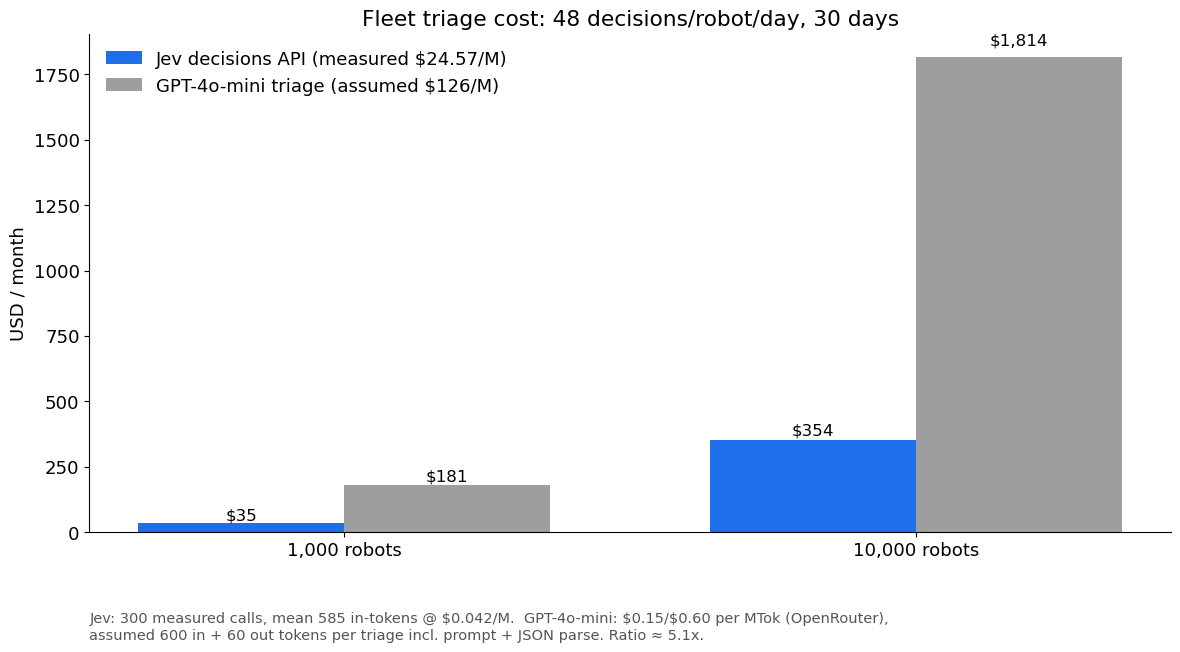
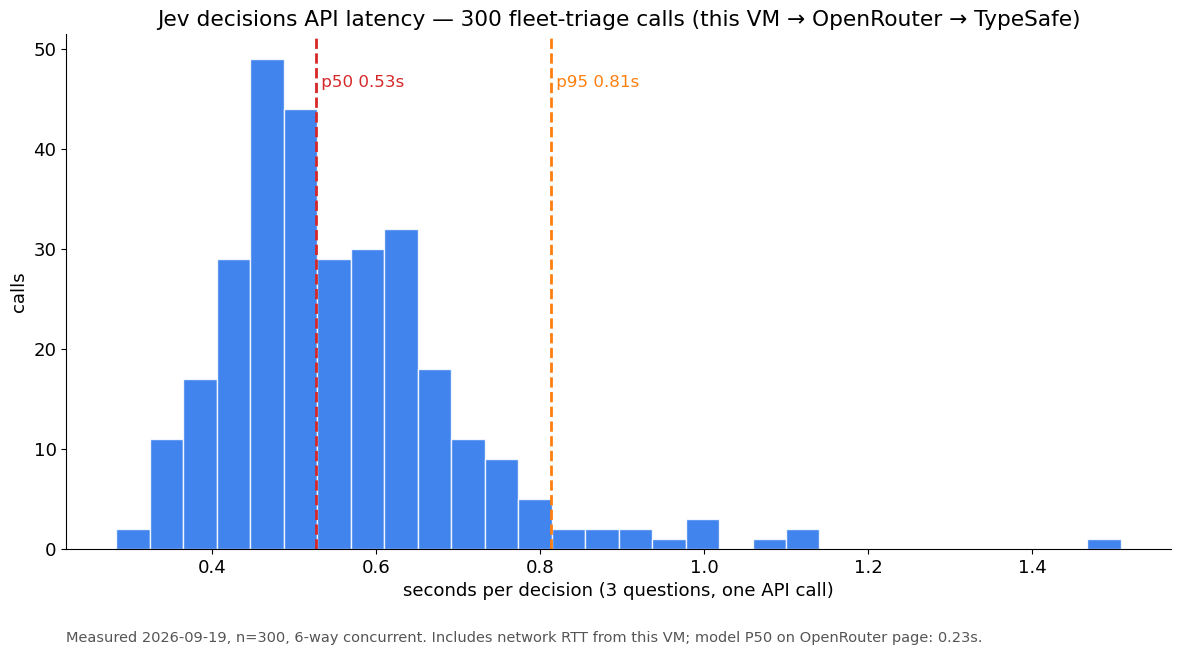
An open-source warehouse AMR incident-triage experiment. It generates 300 bilingual incidents from 41 templates, calls TypeSafe Jev through OpenRouter, records decisions, latency and costs, and compares the results with a CPU-hosted ModernBERT classifier. Evidence and limits: The 300 incidents come from 41 templates: API calls are real, factory failures are not. The 10,000-robot fleet is a cost projection, and 91.3% is agreement with template team labels. The video visualizes results, not factory footage. Latency workloads differ: Jev answers three questions while ModernBERT produces one label. This review checked public documentation, code and media; it did not rerun simulations or test physical hardware. Original project images and demonstrations (with attribution):
Sources: https://github.com/robokrunch/jev-physical-ai/blob/main/README.md https://github.com/robokrunch/jev-physical-ai/blob/main/code/demo-a.py https://github.com/robokrunch/jev-physical-ai/blob/main/REPRODUCE.md https://github.com/robokrunch/jev-physical-ai/blob/main/code/render_video.py